
Fedor: Polish Nomad, Seasonal Laborer
While tending the huerta at Finca Ria Grana in Pizarra, we spent most of our days working alongside Fedor, a young Polish man of about 30. He’d been working with George and Gloria every spring and summer for the past few years, ever since quitting his engineering job back in Poland to travel, working odd-jobs along the way. He’d found the pensioners early in his new nomadic life, and quickly developed a routine: spring and summer in Spain on the finca, an early fall in France, and a return home for the holidays and long winter hibernation. Every year he’d make just enough to subsist and pay his petrol, with a little leftover each season for some quality of life improvements on his RV (he was currently installing some plastic siding as a ceiling covering because he liked the design). And when we met him, he was saving up to move to Australia.
Though his English was quite good, Fedor was quiet. He preferred to listen to the radio while we worked and at meals would concentrate on his food, using bits of bread to shovel in the second and third portions Gloria had made for him. After work and before dinner, he almost always preferred to tinker, welding in George’s shop or making repairs to his RV, when the rest of us would take our siestas. Intentionally or not, this left his hulking frame and battered laborer’s hands to do his talking for him. But beneath the severe lumberjack exterior, he was usually jovial; a smile, though his beard disguised his mouth, playing at the corners of his eyes.
He kept things running around the property, helping with general maintenance, errands, and tending the animals. When Gloria needed help with a new batch of puppies he was always standing near, eight bowls to a hand. He’d even taken to chauffeuring, ever since a surgery which left George’s arm in a sling. He was like an adopted son to them and when he didn’t choose to sleep in his RV parked out back, he always had a room reserved for him in the main house, an open bed which the animals took over when he was gone for the season.
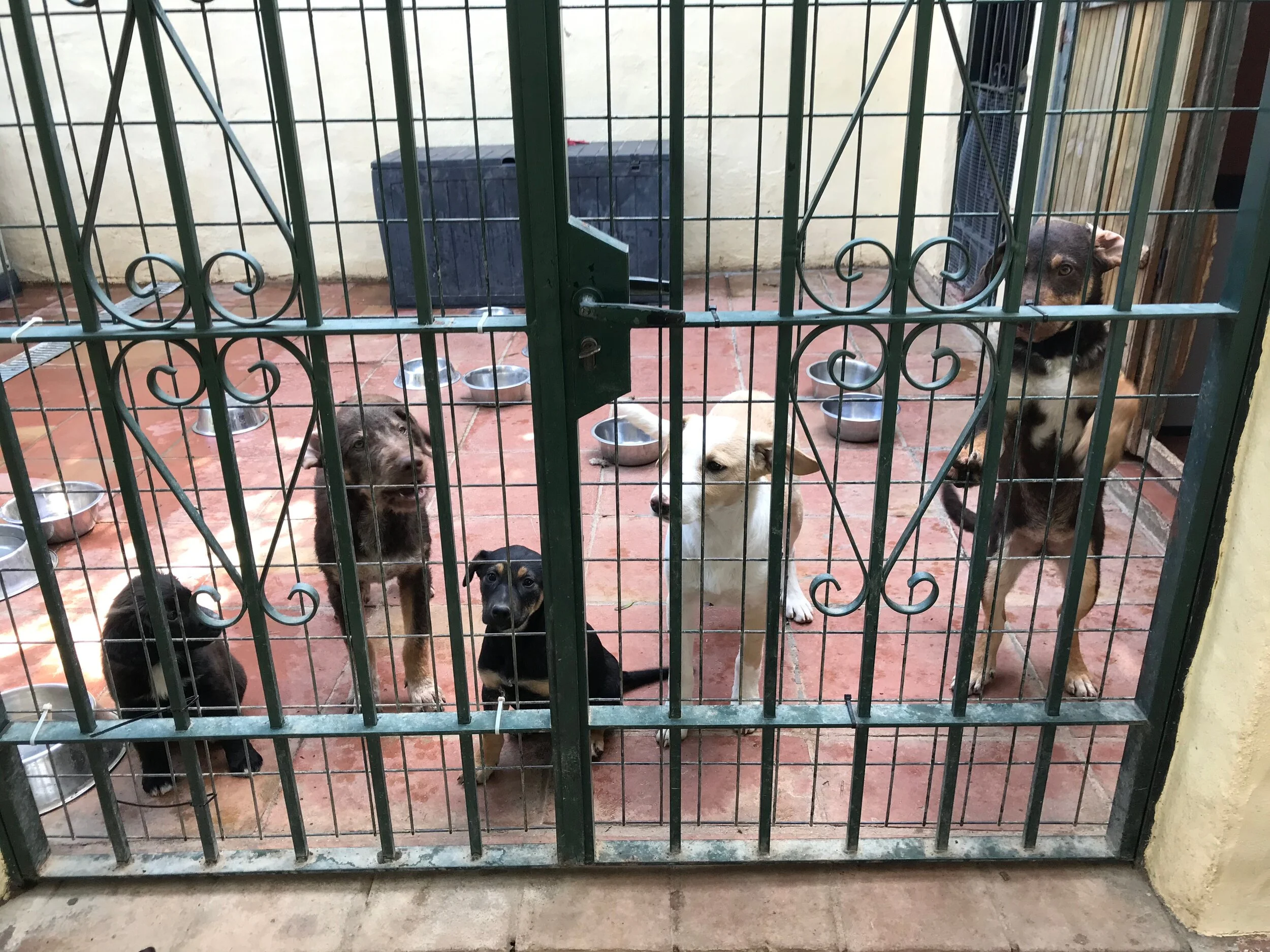
You might’ve called Fedor the foreman, but that would imply a modicum of organization that just didn’t exist at the finca. In the mornings, over toast and marmalade, tea and coffee, George and Fedor would review the various odd-tasks that needed completion. Following that, he’d lead us out into the desert to dig trenches, plant landscaping, pound fence-posts, and spread gravel – typical post-harvest and pre-summer work on an almond grove in the Spanish south.
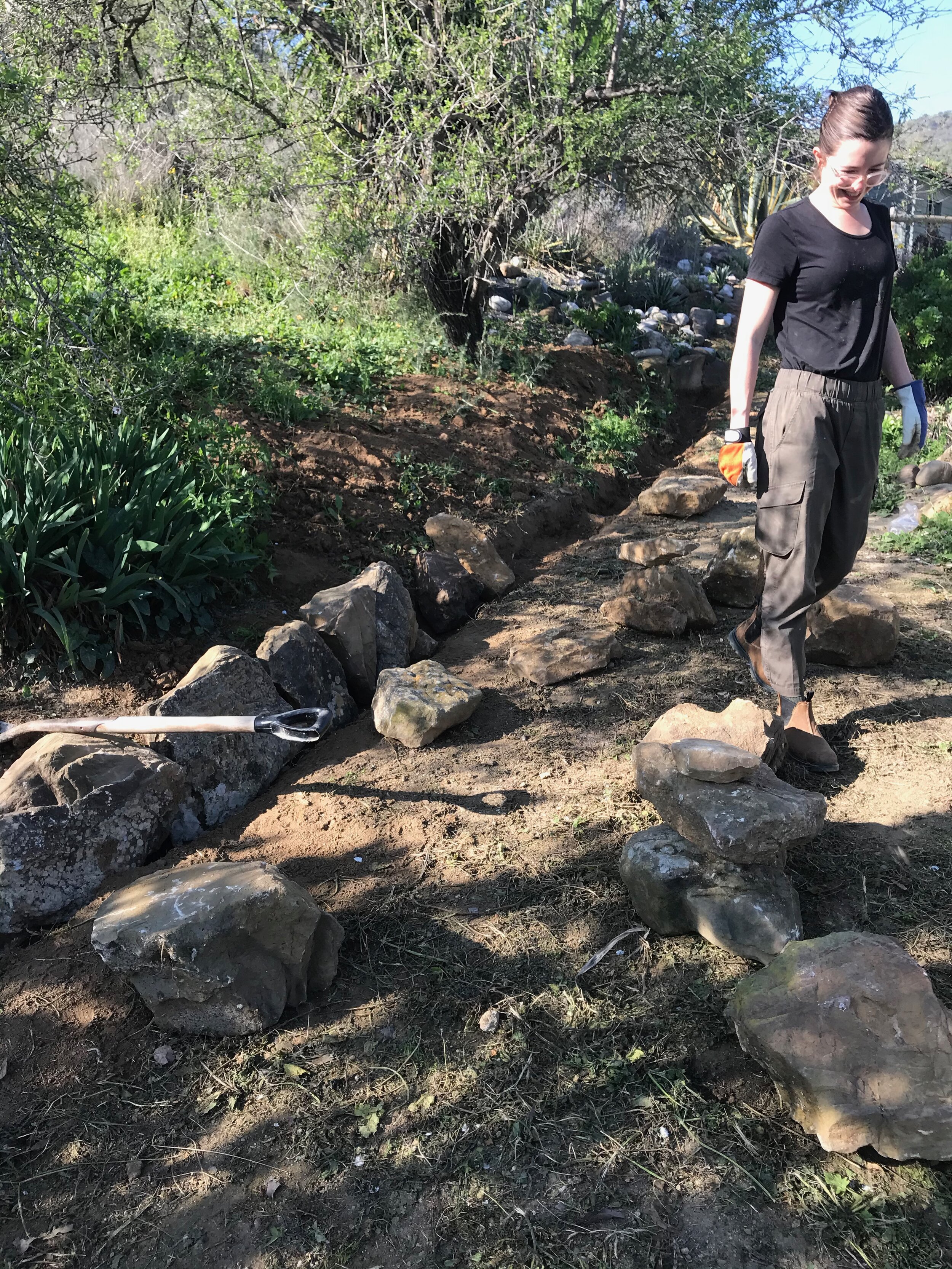
One day we were hauling boulders for a retaining wall and culvert. The three of us would drive around the valley looking for piles on the side of the road; mounded remnants from collapsed walls and ruins, otherwise just large boulders pushed to the ends of the almond and citrus groves to spare the tractor blades. There were plenty to choose from. From our perch along the ridge at the finca, the desert here looked to be all rock and scrub for miles. Considering that, it was a marvel so many people – the remains of whose centuries old homes we were now loading up – had managed to find a life here.
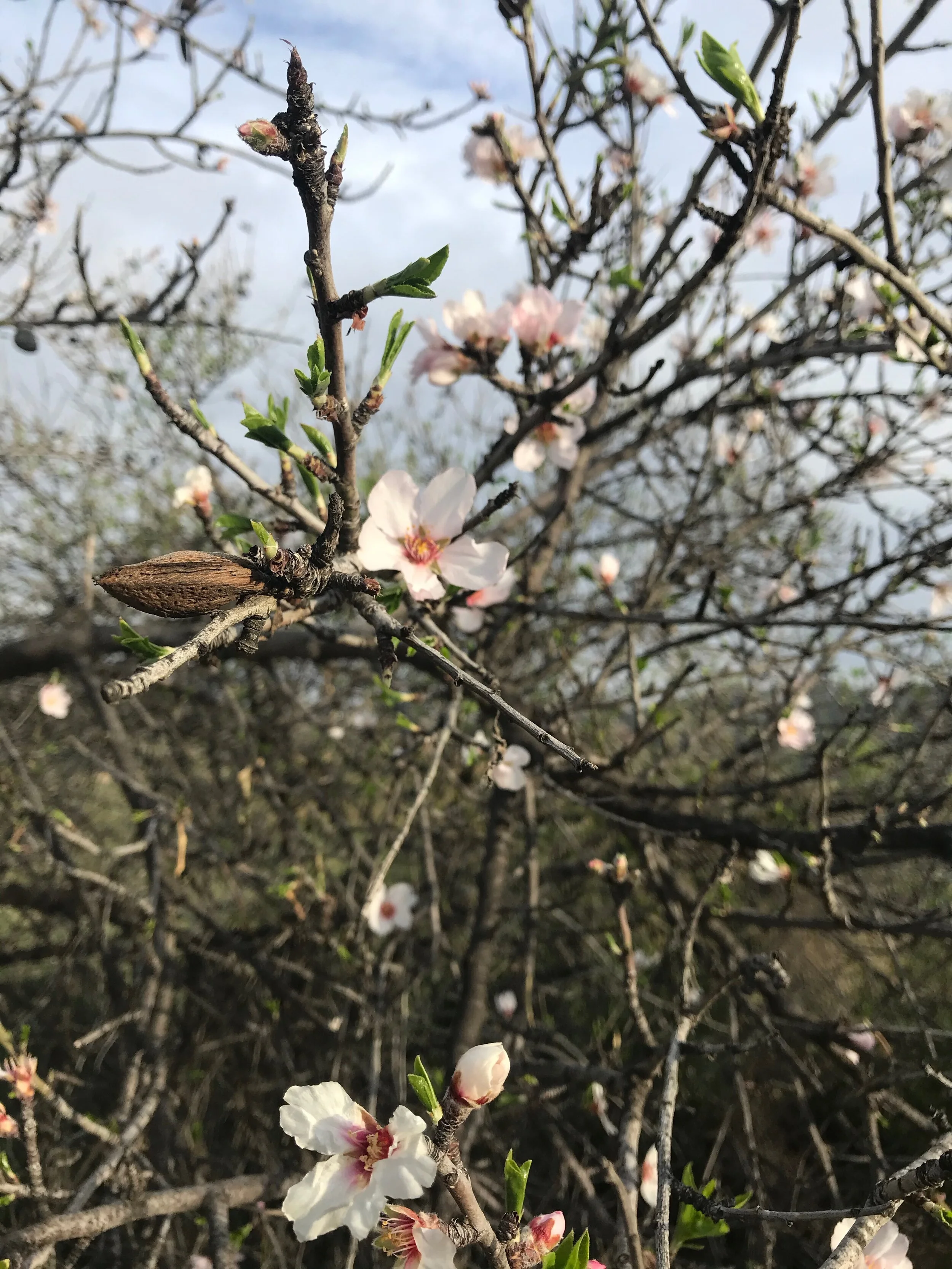
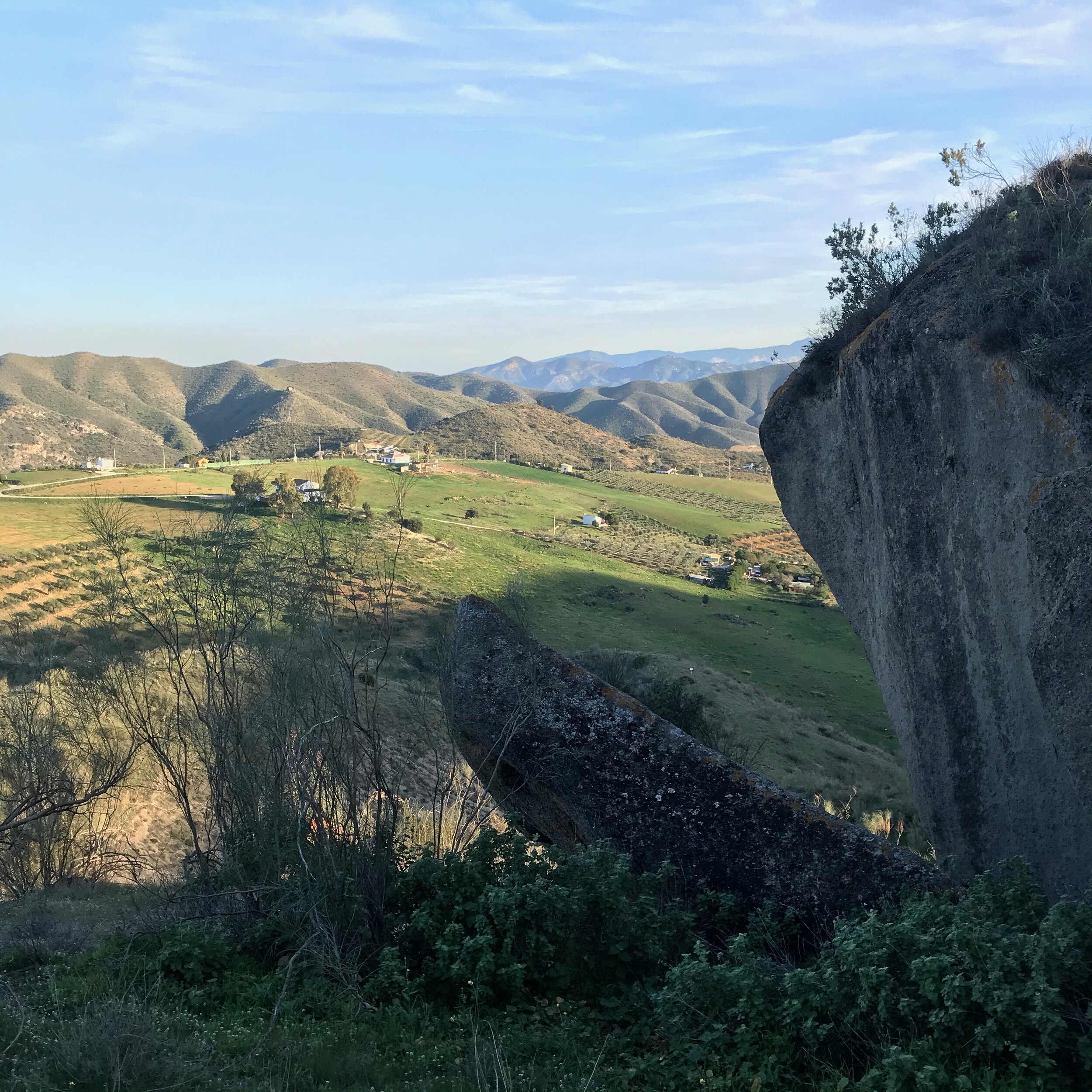
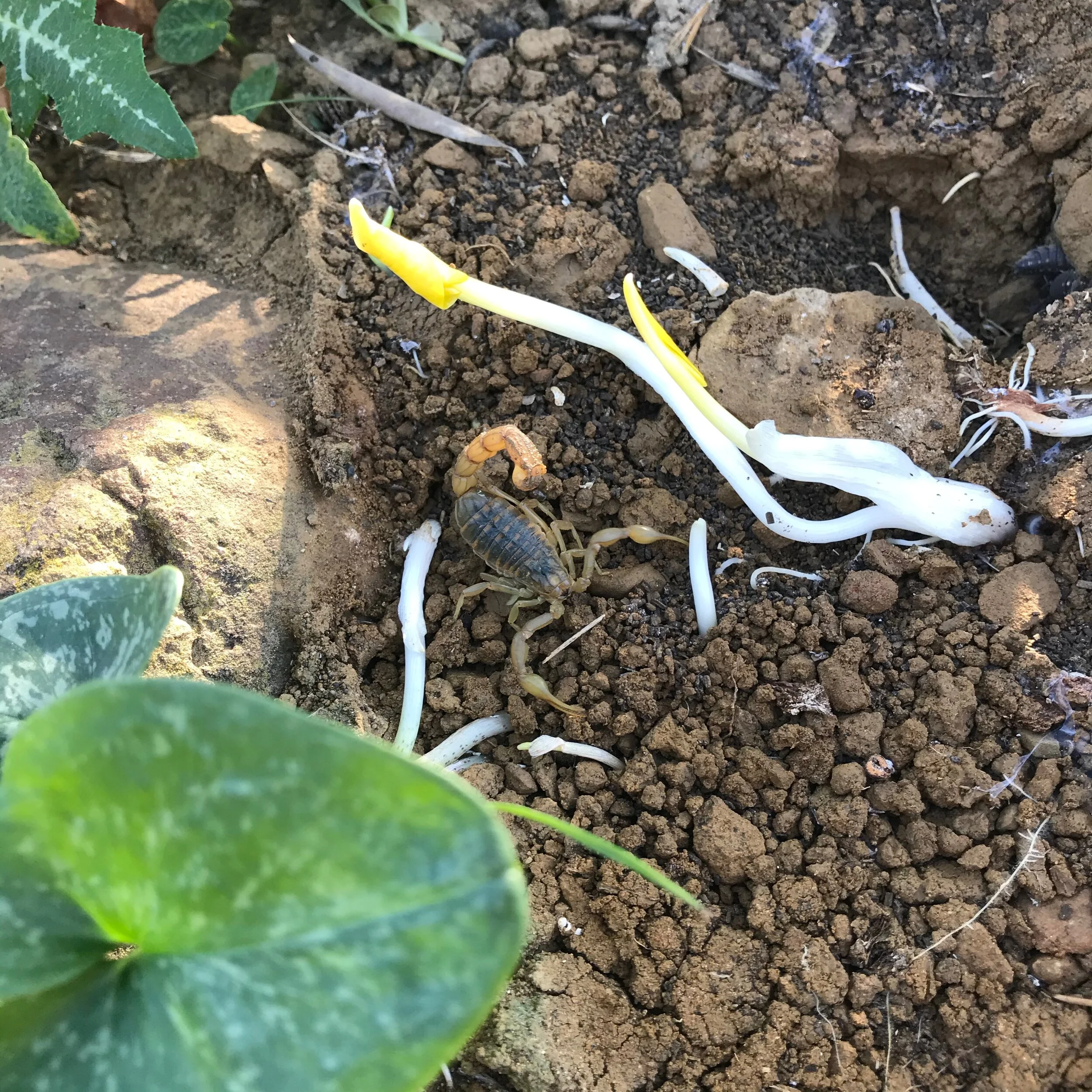
As we worked, Fedor took up whole boulders into his massive arms in a kind of bear hug. The same boulders which would take both Breezy and me together to unload on the other end. I moved a stone and found a translucent scorpion coiled in the dirt below. It was small and flat as if the stone had crushed it, but scuttled beneath some dried grasses when we all gathered round to take a closer look. It raised its pale orange tail in warning, then disappeared into the shadows of a small hole in the earth.
When we returned to our rocks, the excitement of the scorpion (that, or the monotony of our task) got quiet Fedor talking, “I read something on the internet once about the French wine harvest… ,” he cut himself off, girding against the weight of the large boulder he now hoisted in his arms. He rolled it into the trailer which shuddered under the weight and began dusting off his hands. “Actually, I read it but I know it too. I live it.”
We didn’t yet know his story, but it struck me as odd, this insistence that he’d read it as well as having experienced it. As if its existence on the internet gave it more credibility than his own account. Perhaps a habit of someone who’s used to people not caring about the experiences of a day laborer; otherwise, as someone who’s life was hard to believe. He grabbed another armful of smaller stones and tossed them in the rickety trailer before he began:
Every year for the past five, he leaves George, Gloria, and their Andalusian finca in August, taking off in his RV on the multi-day journey to the French border. He’ll stop along the way at one of the hundreds of Spanish Aires, scenic overlooks, parking lots, beaches, and dirt roads designated for overnight camper use by the government. Within three days, sometimes a week depending on the work he finds along the way, he’ll have made it to the Pyrenees.
From here, he’ll head to France’s Medoc Peninsula where he begins a two-month journey from Bourdeaux in the southwest, through the Loire Valley, and on to Alsace at the border with Germany. He charts his course north along the path of ripening grapes in some of the world’s most noted wine-regions, home to some of the most storied vineyards which make some of the world’s most expensive wines. He is among an estimated 15,000 migrant laborers who, every autumn, sweep across the country en masse to facilitate the harvest of the 6 million tons of wine-grapes France’s vineyards will produce in a year.
Fine wine-makers have largely resisted automation in their harvesting practices; the best vineyards because their processes are so particular and the fruit so delicate, while more rustic vineyards seek to produce cheap table wines by keeping equipment costs low. Therefore, every grape of the 50 tons picked on small vineyards and the 1000 tons picked on the largest is picked by hand.
When Fedor and, depending on the size of the vineyard, another dozen, 30, or 60 men (largely Polish) arrive, the acres of vines are already heavy with fruit. When they leave two or three weeks later, they will be bare. Every day during their time there, they’re up at first light for breakfast which is provided (and deducted from their wages): baguettes, brie, and coffee, to fight off the hangover from the night before. Then, they begin the harvest:
About a third of the men stand on ladders, Fedor explains, plucking fruit as quickly as they can and dropping it from above into large woven baskets. These baskets are tied with leather straps to both the backs and fronts of the rest, and weigh 100 lbs combined when filled. The men then haul these overflowing baskets to the beds of nearby trucks where they leave the grapes to be driven to the wineries.
In principle, it’s quite simple. Dozens, maybe hundreds, of trips a day between vine and truck-bed, millions of grapes picked. At nicer vineyards, to avoid squashing the grapes beneath their own weight, smaller baskets are used which can hold only a few layers at a time. This results in hundreds, possibly one thousand trips in a day, by dozens of men, to produce some 120 cases of wine. That said, most vineyards are producing en masse and don’t mind a few squashed grapes. And almost none care about insects or debris which happen to fall in with the fruit (I include this because Fedor felt rather strongly about this point, though I believe it’s probably of no health concern given the fermentation the grapes are about to undergo).
In the heat of late-summer they break often, first around 9 for more bread, cheese, and the first wine of the day – as much as you can drink so long as you can still work. “It’s a tricky balance,” explains Fedor, “as being drunk helps you to bare the work, but wine, more than other alcohol, can make you sleepy in the sun.” This prospect is made trickier as lunch at noon – again, baguettes and brie, perhaps some ham (again, deducted from the hourly wages) – and another break in the heat of the afternoon are both accompanied by an endless supply. And, depending on the vineyard, usually an endless supply of the best wine any of these men have ever drank. A wine which, once back home, none of them could afford, even before their wages were docked for room and board.
Finally, around 6 or 7 they finish for the day. Shoulders aching, drunk, and drenched in sweat and grape juice they head to their dorms. At the best vineyards – “best” labor-wise, which, according to Fedor, seems independent of which vineyards wine-critics would consider “best" – these dorms are often poorly renovated barns, cramped and leaky, all of the men crammed head to toe in cots across the dirt floor. At the worst sites, the workers supply their own shelter which they erect in designated areas near the fields, usually in a small clearing in the woods, building a makeshift tent-city where everyone is left to fend for himself. Fedor with his RV is one of the lucky ones, living on his own and saving the dorm fee from being deducted from his pay.
No matter the vineyard, bathrooms are rarely provided and showers almost never. Now, in the last light of day, the farm hands find nearby streams in which to bathe and wash their clothes. The residue of the juice has dried which makes their shirts painful to rip off. And when the season has ended it will take days to fully wash the purple tinge from your skin.
Others gather around newly lit fires to make dinner (bread and wine are again provided, but no protein or vegetables). They’re all exhausted but will stay up late. This is the best part of their day. They’ll share food and stories. Old friends will catch up, having not seen each other since this time last year. They’ll drink more, and late into the night, until they can no longer work out the math of three meals and a cot deducted from the day’s already meager salary.
They drink to numb the aches and to forget that there are seven more weeks of harvesting.
They drink because it’s the best wine they’ll ever have.
For two months of work Fedor will make 6,000 Euro, 8,000 in a very good year. At 7 days a week and 14 hour days, that’s about €7.00 an hour (and after 5 years he’s found some of the most generous vineyards). Less, if unlike Fedor, you’ve had to deduct a bed from your wages. Significantly more, I suppose, when you consider the sheer volume of French wine you’ve drunk from dawn to dusk for 60 straight days. But you can’t take that home.
To be clear, Fedor chose this life and loves it. The camaraderie, adventure, and wine a welcome alternative to life in a grey Polish office. He shared this story meaning it more as an interesting anecdote than an exposé. But he also shares it knowingly. He’s met these men, worked shoulder to shoulder with them every fall for the last half-decade, and he knows that for many it’s not a choice. Men with wives and children at home or elderly parents to take care of. And when the harvest’s over, while he jets back to Poland on the Autobahn for the holidays and a long 4 months back home, he knows that some are only heading further south to Greece or Spain for olive and almond harvests, with barely enough time to post their wages home.
…
We finished loading the trailer and returned to the finca leaving a trail of dust in our wake. Fedor turned the radio up and didn’t speak again til lunch when he asked if we wanted anything to drink. Sure, we said, we’ll have a beer.